
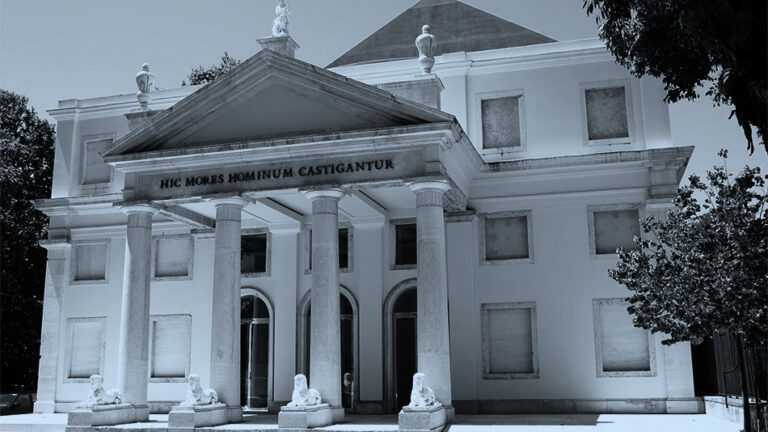
The Teatro Thalia (or Teatro das Laranjeiras) was built in 1825 by Joaquim Pedro Quintela (1801–1869) (2nd Baron of Quintela, later Count of Farrobo), an amateur musician, music lover, and a central figure in Portuguese musical life in the mid-nineteenth century, on his Quinta das Laranjeiras estate, located on the site where the Lisbon Zoo now stands.¹
This small theatre was inaugurated on 26 February 1843 with the opera Le duc d’Olonne by Daniel François Esprit Auber, and hosted operatic performances—both serious and comic—sometimes of considerable luxury, involving both professional and amateur performers (including Farrobo himself and members of his family), Portuguese and Italian alike (the latter contracted for the Teatro de São Carlos).
The repertoire consisted mainly of the most popular operas by Gioachino Rossini, Saverio Mercadante, Gaetano Donizetti, and several French composers, while also providing space for Portuguese composers.
In 1862, the building was destroyed by fire.²