
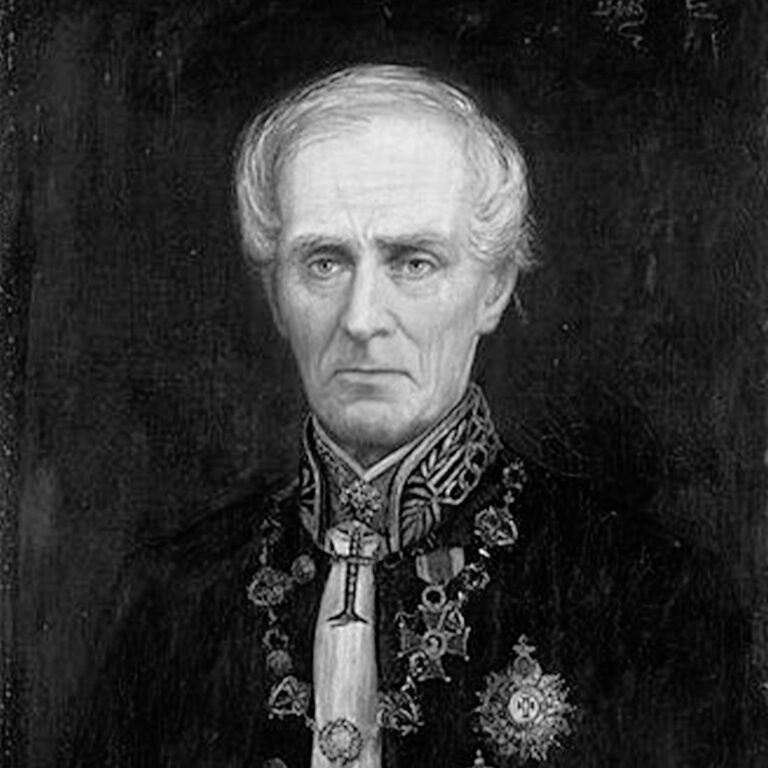
Manoel Innocencio Liberato dos Santos Carvalho e Silva was born in Lisbon on August 23, 1805, the son of a musician of the Royal Chamber and the Teatro de São Carlos, also named Manoel Innocencio de Carvalho¹. The composer studied with Friar José Marques and showed musical aptitude from an early age, particularly as an organist: “The organ was then his favourite instrument, and King João VI held the young artist in high regard and delighted in hearing him play”². He joined the Brotherhood of Santa Cecília on December 22, 1814, at only 9 years old, and, still very young, managed to win the esteem of the Portuguese court.
In the 1820s, he was appointed organist of the Royal Household and music teacher to the infantas D. Anna de Jesus Maria and D. Maria da Assumpção. From then on, he remained very close to the royal family and accompanied King Miguel during the five years of his reign, but his pro-absolutist position forced him to step away from the positions he held upon the advent of the constitution³. Away from the court, he chose to devote himself to theatre – in 1839, he presented his first opera, D. Ignez de Castro, at the Teatro de São Carlos, and three years later he returned to the operatic genre, at the same theatre, with O Cerco de Diu. According to Ernesto Vieira, he left an unpublished opera entitled Il conte di Leicester⁴.
In 1844, Liberato dos Santos regained his position alongside the royal family when he was appointed by Queen Maria II as master of the Royal Chapel and music master to the monarch’s children. He composed the two official anthems of King Pedro V and King Luís I and also wrote the Te Deum that was sung at the acclamations and weddings of both⁵. The composer died in November 1887, a victim of pneumonia, after being awarded the rank of Knight of St. Gregory by Pope Pius IX⁶.
2 S | 2 T | Bar | 2 Soloists + 2 Children + Chorus + Orchestra
See Opera