
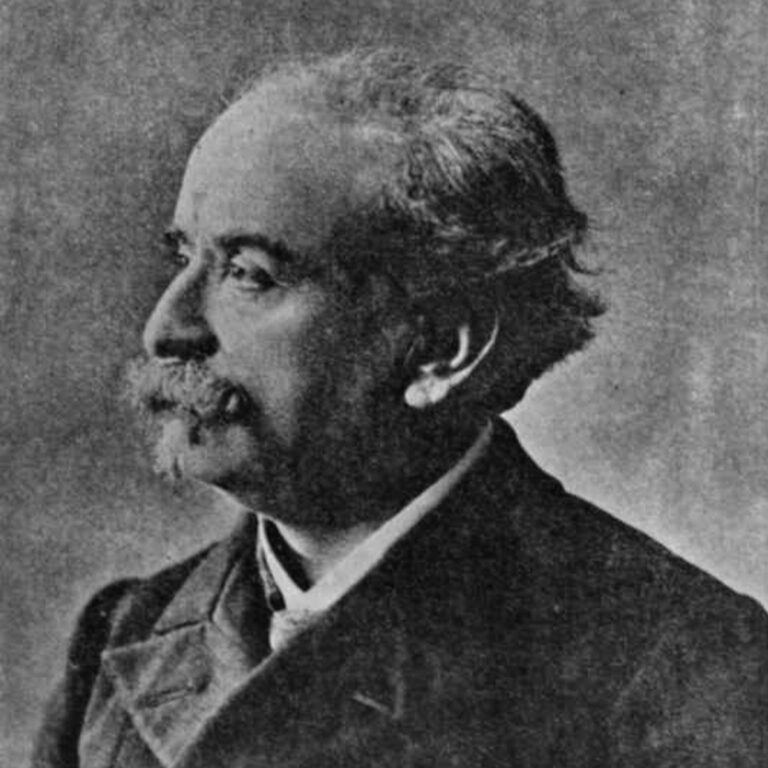
Miguel Ângelo Pereira was born in Barcelinhos, Barcelos, on January 27, 1843, and left for Brazil as a child, joining his father, also a musician, and receiving most of his musical training in Rio de Janeiro. He attended the city’s Conservatory and received lessons from the Brazilian master Francisco Manuel da Silva and advice from the pianist Sigismond Thalberg.¹ At the age of 19, the musician won the competition for organist of the Imperial Chapel of Emperor Pedro II, a position he combined with conducting the orchestra of the Teatro Ginásio Dramático and the start of a promising career as a pianist.²
Miguel Ângelo returned to Portugal in 1865 and settled in Porto, already with the idea of composing an opera inspired by a prominent work of Portuguese literature, following the example of Francisco de Sá Noronha, whose opera O Arco de Sant’Anna, based on the novel of the same name by Almeida Garrett, dates from the same period. This ambition materialised in the opera Eurico, with a libretto adapted from a novel by Alexandre Herculano, which premiered at the Teatro de São Carlos in 1870.³ In addition to Eurico, the musician composed two other unpublished operas – Zaida and Avalanche – as well as symphonic repertoire, pieces for voice and piano, and various other musical genres. Noteworthy are, for example, a Te Deum written on the occasion of the inauguration of the statue of King Pedro V in Porto; and the Cantata Luiz de Camões – a large‑scale choral‑symphonic work composed for the poet’s centenary celebrations and presented at the Palácio de Cristal in 1880.⁴
Miguel Ângelo founded the Sociedade de Quarteto do Porto in 1874, later absorbed into the Orpheon Portuense, together with Nicolau Ribas, Moreira de Sá, Marques Pinto and Joaquim Casella. The group played an important role in disseminating chamber music repertoire, but was violently broken up due to personal conflicts among its members. In 1877, the composer created a Music Course that trained prominent performers and teachers, such as Óscar da Silva, Artur Ferreira de Sousa and Teresa Amaral, and in the 1880s he founded a music publishing house which, after his death on February 1, 1901, was taken over by his son, Rafael Ângelo, also involved in composition and music pedagogy.⁵
S | A | 2 T | Bar | 4 B + Chorus + Orchestra
See Opera