Librettist: Vasco Graça Moura
Libretto inspired by Jacob and the Angel by José Régio
Symphonic opera
Date: 2011
Language: Portuguese
Duration: 125 minutes
Large-scale
Santiago Malpago: bass
Angelino Rigoletto: lyric tenor
Mimi Kitch: dramatic soprano
The Shareholder: baritone
The Spokesperson: light soprano
Chairman of the Board: bass
The Lawyer: baritone
Doctor: mezzo-soprano
Magistrate: tenor
2 security guards: tenor and baritone
Chorus of Angels/Bank workers’ committee: chorus
PROLOGUE
A powerful banker sleeps in an armchair in his luxurious office at the bank’s headquarters. An open book rests upon his chest. Suddenly, his sleep is interrupted by the visit of a mysterious angel, who appears unexpectedly out of nowhere; the banker is seized with terror at the angel’s presence. The two engage in a struggle, in which the angel completely overpowers the banker; a chorus of angels accompanies the banker’s defeat. This struggle symbolises the biblical episode of Jacob wrestling with the Angel from the Old Testament.
ACT I
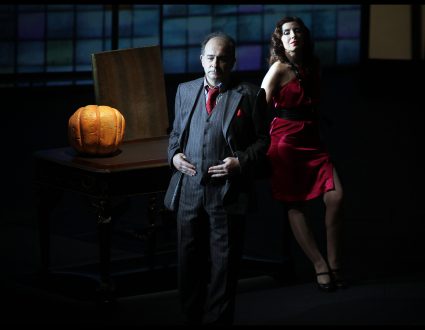
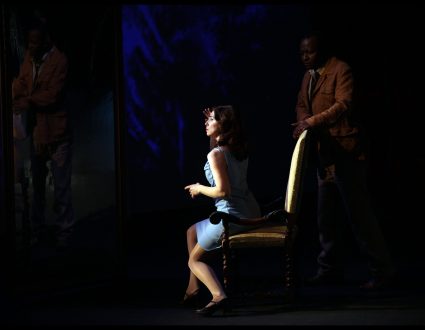
After the banker has summoned his loyal security guards, the angel reappears disguised as a journalist and begins to take part in the routine of the banker’s life; the latter, in turn, starts to lose his composure and control, becoming increasingly nervous and aggressive. The journalist explains to the banker that he has come to fight with him the struggle of Jacob and the Angel, but that he intends to be the one to defeat him; the banker is terrified. Meanwhile, various figures arrive at the bank’s headquarters, including important members of its hierarchy and the banker’s wife; all become aware of the struggle and of the journalist. The wife feels attracted to the enigmatic figure of the angel/journalist. After an exchange of insults and offences between the banker and the others, the wife leaves the office offended and filled with deep resentment towards her husband. Indifferent, he coldly dismisses several of his most loyal guards and hires the journalist, inviting him to remain with him.
ACT II
In the sumptuous boardroom, the wife receives a visit from the banker’s brother, a major shareholder in the bank and secretly in love with her. She asks the shareholder to help her devise a plan to bring about the banker’s downfall, a request he readily accepts. Then, following a strategy to secure majority support, she receives the chairman of the general assembly, the chief lawyer, and a public prosecutor connected to the bank. Even before the three high-ranking figures enter the room, the journalist surprises the wife, who forces him to hide behind a sofa. From this secret meeting emerges an agreement for the three to support the wife in removing the banker from power. The journalist, having overheard everything, suddenly reveals himself, to the astonishment of the three men. The wife hypocritically feigns surprise and assures her accomplices that the journalist will be immediately arrested. After everyone leaves, she calls him back and remains alone with him. She attempts to seduce him, but always unsuccessfully: the angel remains cold and unreachable. Finally, she confesses her supposed love and makes one last attempt to persuade him to join her plan to overthrow the banker. Realising it is futile, she abandons her seduction and summons her husband to the boardroom. He arrives almost immediately, saying he has come at the journalist’s request. He is tired, nervous and aggressive; from the outset, he senses the fatality of the conversation. At last, it is the angel/journalist himself who reveals that he can abandon everything, including the bank, and at that moment the banker suffers a nervous breakdown and begins his final descent into madness. He threatens everyone and attempts to dominate his wife by force; terrified, she calls for the guards, who remove the banker.
ACT III
The bank’s vault. The banker, deposed from the presidency, is imprisoned under the orders of his brother and wife, who have since married. As in the prologue, the angel/journalist appears to the banker out of nowhere and speaks with him about his current life, which he considers miserable, blaming the journalist for everything that has happened to him; the journalist, however, asserts that the story is only just beginning, and that all the misfortune he has already caused is still not enough. The banker then tells him that he intends to ask one final favour of his brother and wife, assuring the journalist that he cannot imagine what it will be. Meanwhile, the sound of people singing and playing instruments begins to be heard: it is the bank’s workers’ committee and all the senior executives, including the wife and the shareholder. They have come to visit the banker, a year after his removal on grounds of illness, and also to celebrate the good news of the wife’s pregnancy, which finally ensures the succession of the empire. Desperate, the banker demands to be left alone with his wife and brother. Everyone leaves, but the journalist insists on staying to hear the banker’s request. After a conversation with the angel/journalist, the shareholder begins to take a liking to him and offers him a position in his service. Aggressively, the banker prevents this proposal and declares that the journalist belongs to him and that he intends revenge: he asks his brother for the journalist’s life, for he has destroyed his own, and the price has been too high. The shareholder hesitates but ultimately agrees and assures the banker of his compliance; the banker, increasingly deranged, seems no longer to hear his brother’s conciliatory words. The journalist is murdered, and the banker watches in terror. At dawn, under a dim and diffuse light, the angel — now wearing the clothes of the dead journalist — appears once more to the banker, who inwardly knew that he could not die. He begins, however, to ask for forgiveness. In the presence of the bank’s doctor, the banker once again asks for help and for the presence of his brother and wife, but since the angel is merely an apparition visible only to him, the doctor tries to calm him and assures him that he will recover. At last, increasingly overwhelmed by the presence of the angel, the banker manages to free himself from all his final human constraints and sincerely asks forgiveness, confessing that he had always felt and desired him, but that the darkness of the night had always surrounded him, preventing him from discovering and listening to him. In a final breath, he asks for peace and serenity and, moved, feels redemption.
EPILOGUE
The banker lies dead. A chorus of angels approaches his body and, in ecstasy, lifts it, exalting the sweetness of death.
2 Fl (2nd Picc) | 2 Ob (2nd Eh) | 2 Cl (2nd Bcl) | 3 Bsn (3rd Cbsn) | 4 Hn | 2 Tpt | 3 Tbn | Tb | 5 Perc | Hp | Pf/Cel | Gtr (Egtr) | Vln | Vla | Vc | Cb
Date: 2011
Venue: Teatro Nacional de São Carlos, Lisbon
Commission: Teatro Nacional de São Carlos
Stage direction: João Botelho
Music direction: Lawrence Renes
Cast: Jorge Vaz de Carvalho, Musa Nkuna, Sara Braga Simões, Diogo Oliveira, Chelsey Schill, Nuno Dias, José Lourenço, Ana Ferro, José Corvelo, Bruno Almeida, Christian Lujan, Teatro Nacional de São Carlos Chorus and Portuguese Symphony Orchestra