
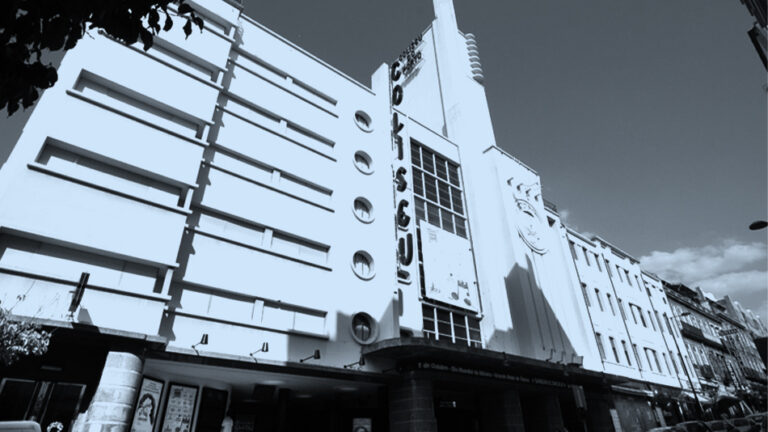
The Coliseu do Porto, located on Rua Passos Manuel in Porto, on the site of the former Salão Jardim Passos Manuel, was designed in 1937, shortly before the closure and demolition of that earlier venue, and its construction was completed in 1941. The inauguration took place on 19 December of that year, with a concert by the National Symphony Orchestra conducted by Pedro de Freitas Branco, featuring the singer Maria Amélia Duarte de Almeida and the pianist Helena de Sá e Costa. From the outset, the new venue distinguished itself through its versatility: while giving prominence to large orchestras (including international ensembles), it also hosted opera, dance, revue theatre, cinema, and circus performances, as well as, in later decades, Portuguese popular music, pop-rock, jazz, and blues.¹
In 1995, an impasse arose regarding the future of the Coliseu do Porto, prompting a wave of solidarity that brought together private citizens, institutions, and companies. This movement led to the creation of the Association of Friends of the Coliseu do Porto on 17 November 1995, which acquired the venue the following year (deed signed on 2 August 1996). A fire on 28 September 1996 caused significant damage, but a renewed wave of solidarity made it possible to restore the building within a few months, allowing it to reopen as early as 12 December.
In 1997, renovation and modernisation works were undertaken, and the venue reopened at the end of 1998 with Carmen, in a co-production by the Círculo Portuense de Ópera and the Orquestra Nacional do Porto. From April 2018 onwards, the institution adopted the name Coliseu Porto Ageas, operating in partnership with the prestigious insurance group.²