
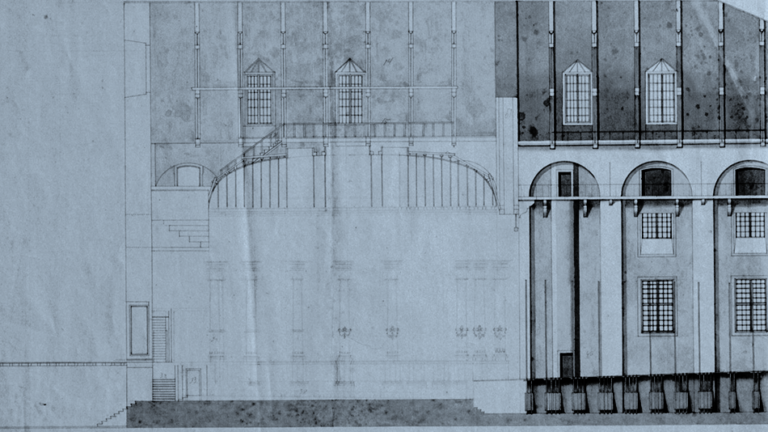
With the accession to the throne of King José I in 1750, the organisation of a court opera establishment began, involving the recruitment in Italy of some of the finest singers of the time, the renowned Neapolitan composer David Perez as musical director, and the distinguished theatrical architect Giovanni Carlo Sicinio Bibiena, who was entrusted with the task of building a magnificent opera house in Lisbon.¹
The Real Teatro de Salvaterra de Magos was a permanent opera house built in 1753 within the Royal Palace of Salvaterra de Magos, where Carnival seasons were held between mid-January and Ash Wednesday. Its programming was almost exclusively limited to Italian opera buffa.
It was apparently during a performance in this venue that Queen Maria I experienced one of her most severe episodes of mental disturbance, after which moments of entertainment at court became increasingly rare.²