
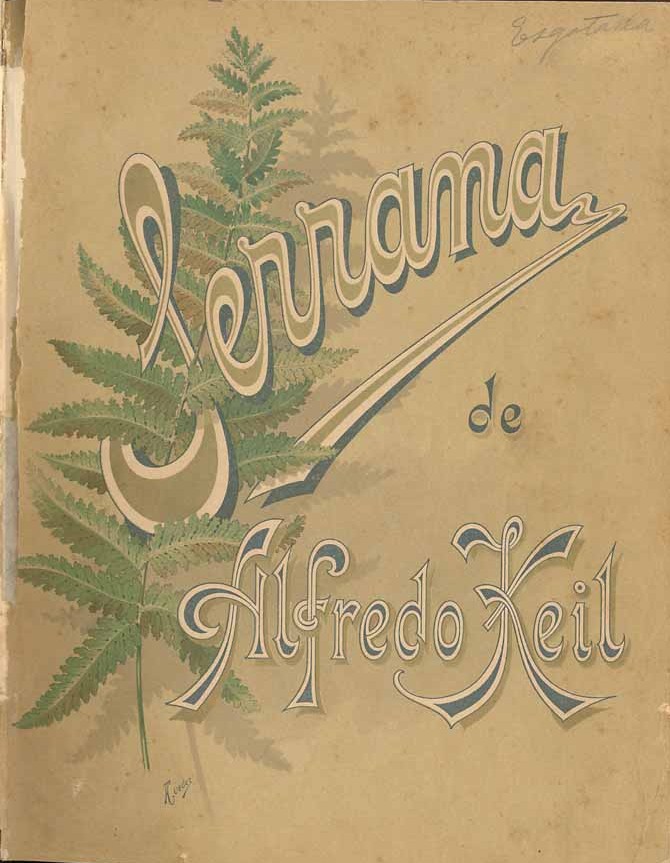
Librettist: Henrique Lopes de Mendonça
Libretto based on the novella Como ela amava by Camilo Castelo Branco
Lyric drama in three acts
Date: 1899
Language: Portuguese (premiered in Italian, version by Cesar Féreal)
Large-scale
Zabel: soprano
Pedro: tenor
Marcello: baritone
Nabor: bass
André: tenor
A shepherd: tenor
Manuel: bass
Chorus
The action takes place in 1820, in the small village of Malhada, located in the Serra da Estrela. The men heatedly discuss old rivalries between villages, reignited now that Pedro, from the village of Alfatema and Zabel’s (the Serrana) first love, had sworn to ruin the fair that was to be held that day for the feast of St. Sylvester, patron saint of Malhada. Pedro’s revolt had been triggered by the news that Marcelo, Zabel’s current companion, driven by intense jealousy and the desire to increase his fortune, had decided to emigrate to Brazil, taking the girl with him. Despite the calls for calm from the elder Nabor, Marcelo manages to convince a group of peasants to use force to prevent Pedro and his companions from carrying out their intentions. In an attempt to calm tempers, Nabor offers Marcelo a glass of wine, and he sings the Dionysian song “Eve in paradise over there”. Meanwhile, a group of female singers arrives, led by Zabel, who, at everyone’s request, takes part with André in a challenge song “They call me Rosa in the mountains”. Then the peasants from the rival village of Alfatema appear, led by Pedro. Marcelo and his men head toward the bridge that separates the two villages, while Pedro, approaching, taunts Marcelo. The two rivals face each other with weapons drawn when Zabel intervenes, placing herself between the two men. With gentle words she manages to calm Marcelo, while secretly arranging a meeting with Pedro for that night. Meanwhile, the fighting resumes, more violently, and is now interrupted by Nabor, who separates the rival groups. The bells call for the procession, and everyone sings a hymn of praise to the patron saint.
At night, inside Marcelo’s house, Zabel and the spinners are busy with their tasks while a storm begins to form in the mountains. Frightened by the squall, the spinners leave, leaving Zabel alone. She questions her feelings for Pedro when he appears. The girl runs into his arms, confessing her love and lamenting the moment she let herself be seduced by Marcelo’s wealth. The two decide to flee and live far from that place when Marcelo’s voice is heard in the distance. Zabel hurriedly gathers the gold into her bundle and pockets, admonished by Pedro who tells her there is no time for that. Fleeing through the window to avoid being surprised by Marcelo, Pedro strikes his head on a rock, which will cause his death. Drunk, Marcelo forces the door and enters the house, attempting to rape Zabel, who threatens him with a knife and manages to escape.
In the morning, Nabor finds Pedro’s body. Grief‑stricken, he buries him near a cave, placing a rough wooden cross at the site. The elder questions the shepherds about what happened, but they can tell him nothing. Torn by deep sorrow, Nabor sings a Pater Noster. To everyone’s astonishment, Zabel appears on the rocks, looking demented, not recognizing Nabor, who supports and comforts her and recalls the happy times she spent with Pedro. Before the horror of Nabor and Zabel, Marcelo arrives, armed and ready to kill the girl, whom he accuses of adultery and theft. However, in a brief moment of remorse, he asks Zabel to reconsider, telling her that he still loves her. But the Serrana, with hatred, throws the gold necklace at his feet, shouting: “I loathe you.” Trying to prevent the worst, Nabor attempts to protect the girl, but Marcelo violently pushes him aside and fires. Mortally wounded, Zabel drags herself to Pedro’s grave, kisses the ground, and dies. Acknowledging the crime he has committed, Marcelo flees in horror.1
Fl | Ob | Bsn | 2 Cl | Tpt | 2 Hn | Perc | Vln | Vla | Vc | Cb 2
Score: Biblioteca Nacional de Portugal
Although the libretto was written in Portuguese, based on the novella Como ela amava by Camilo Castelo Branco, Serrana was premiered at the Teatro Nacional de São Carlos on March 13, 1899, in its Italian version, as was customary at that theatre throughout the 19th century. Only a decade after the premiere was the opera staged with the Portuguese text, at the Teatro Trindade. In any case, Alfredo Keil “mentions Serrana as the first opera to be printed with a Portuguese text, and the 90 subscribers who financed the edition [of the vocal score, dated 1899] refer to it as ‘the first modern opera that initiates the ‘Popularization of Portuguese Music’ ”.
Serrana became the most performed 19th‑century Portuguese opera, and both its language, its subject matter, and its use of excerpts from folk melodies contributed to its being interpreted as a symbol of national opera. Between its premiere and 1979, Serrana appeared in nine seasons at São Carlos, in four seasons at the Coliseu dos Recreios, at the Teatro de São João in Porto (1901), at the aforementioned Teatro Trindade (1909), in a production by the Companhia Portuguesa de Ópera in the 1960s, and at the Teatro Rivoli in Porto (1979).
Date: 1899
Venue: Teatro de São Carlos, Lisbon
Cast: Eva Tetrazzini, C. Cartica, Mario Ancona, G. De Grazia, C. Ragni, Mugnoz Degrain and Chorus and Orchestra of the Teatro de São Carlos